- Botanical Name
- Jackmanii: Clematis x jackmanii. Viticella: C. viticella. ‘Freckles’, ‘Lansdowne’, ‘Balearica’: C. cirrhosa. ‘Pauline’: C. macropetala. ‘Purity’: C. paniculata. ‘Sweet Summer Love’: C. flammula. ‘Plena’, ‘Cassis’: C. florida. Golden: C. tangutica. ‘Starlet’: C. montana. ‘Princess Diana’: C. texensis.
- Family
- Ranunculaceae
- Plant Type
- Jackmanii, Viticella: Deciduous Climber. ‘Taiga’, ‘Cassisi’: Semi Evergreen. ‘Freckles’, ‘Balearica’, ‘Purity’, ‘Lansdowne Gem’: Evergreen.
- Size (HxW)
- Width varies with growing method, see plant label for specific HxW
- Depth & Spacing
- These Clematis are still small and need to establish a decent root system before they can flower their best. Some argue it is best to plant into a large pot (20cm or more) for the first year and then into the garden – this will depend on your conditions – if they are ideal you needn’t worry but if your soil is poor or you get hard frosts it may help give them a better start. Plant at the same depth as in the pot, or a centimetre or two lower, with the crown just below soil level. It is best to dig the hole a little deeper, Clematis have deep roots so this will enable them to better penetrate the soil and settle in. Ensure roots are well covered. Give plenty of room to grow and something to grow on – they can twin around something under a centimetre – wire, obelisk, string etc.
- Soil
- Well drained, fertile and humus rich soil will give the best results.
- Aspect
- Full sun to semi shade. Clematis like their ‘heads’ (tendrils) in the sun, and their ‘feet’ (roots) cool.
- Climate
- Cool to Mediterranean
- Frost
- Hardy
- Water
- Water to establish, keep moist in growth, especially summer for best flowers. It takes the roots at least four weeks to penetrate the surrounding soil and they should be watered regularly at that time.
- Fertiliser
- Feed during winter, with a well balanced fertiliser or any well rotted animal manure plus potash. In summer it is beneficial to add a thick layer of mulch, keeping clear of the main stalk to help keep the roots cool.
- Flowering Time
- See plant label.
- Pruning
- Don’t panic, you can’t kill a Clematis with incorrect pruning! It is always a good idea to add fertiliser and water in after pruning.
- Group 1
- ‘Freckles’, ‘Starlet’, ‘Balearica’, ‘Purity’, ‘Lansdowne Gem’.
- Group 2
- Jackmanii (some exceptions below)
- Group 3
- Viticella, ‘Taiga’, ‘Hagley Hybrid’, ‘Grunwald’, ‘Ville de Lyon’, ‘Sweet Summer Love’, Golden, ‘Plena’, ‘Princess Diana’, ‘Cassis’, ‘Kokonoe’, ‘Mazowsze’, ‘Romantika’, ‘Skyfall’
- Group 1
- Includes early flowering Clematis that are evergreen or deciduous. This group flowers winter/spring on the previous year’s growth (old wood). Regular pruning is not required, but you can, remove spent flowers or shape or train or remove weak/dead branches in mid to late spring after flowering has finished and there is no risk of frost. If they have become overgrown you can cut them right back to the base but you will lose the next seasons blooms. (C. montana, C. alpinia, C. cirrhosa, C. macropetala, C. armandii, C. cartmanii).
- Group 2
- Includes large flowering deciduous Clematis that flower mid season spring/summer on the previous year’s growth (old wood). They often repeat bloom in summer on new wood - if they flowered double in spring/ summer, often the second round of blooms will be semi double or single. In summer, give a light prune removing spent blooms back to the growth bud as the flowering wanes then fertilise to encourage more blooms. In late winter/ spring remove dead or weak growth from the base as required - be careful not to prune too hard or you will lose your flowers. You can choose the renovation method with this group - leave them unpruned for 3-4 years and then cut back to 30cm in late winter. You will miss out on a few flowers that season but if you don’t have the time for annual pruning it is not a bad compromise. (C. jackmanii)
- Group 3
- Includes late flowering Clematis that bloom summer-autumn, have large flowers, are deciduous and flower only on the new season’s growth. They need to be pruned hard (back to the lowest pair of buds) in late winter/early spring. If they have become an untidy mess of branches, you can cut them back to 30cm from the base. It won’t take long for new shoots to appear. If you would rather leave the seed heads on you can prune out a few branches each year from the base. (Viticella group, C. florida and C. integrifolia, ‘Rouge Cardinal’)
- Group 2/3
- Some Clematis will respond well to pruning methods from group 2 or 3. Here you maintain the plants framework while selectively cutting some stems back to the base. It will keep the plant in check and you will be able to have a longer flowering season.
- Herbaceous
- Herbaceous Clematis should be pruned hard to just above the ground in early spring.
- Not Sure
- If you have a Clematis growing that you are unsure of, just remember if it flowers before Christmas it is a gift that you don’t need to prune and if flowers in the new year, you should prune it before spring (late winter).
- Notes
- These impressive bloomers need some support to grow on. Often they will flower twice, some varieties don’t take a break, flowering from spring to autumn. Clematis usually take around three years to establish and flower to potential.
Clematis 'Purity'
Shop Clematis 'Purity'
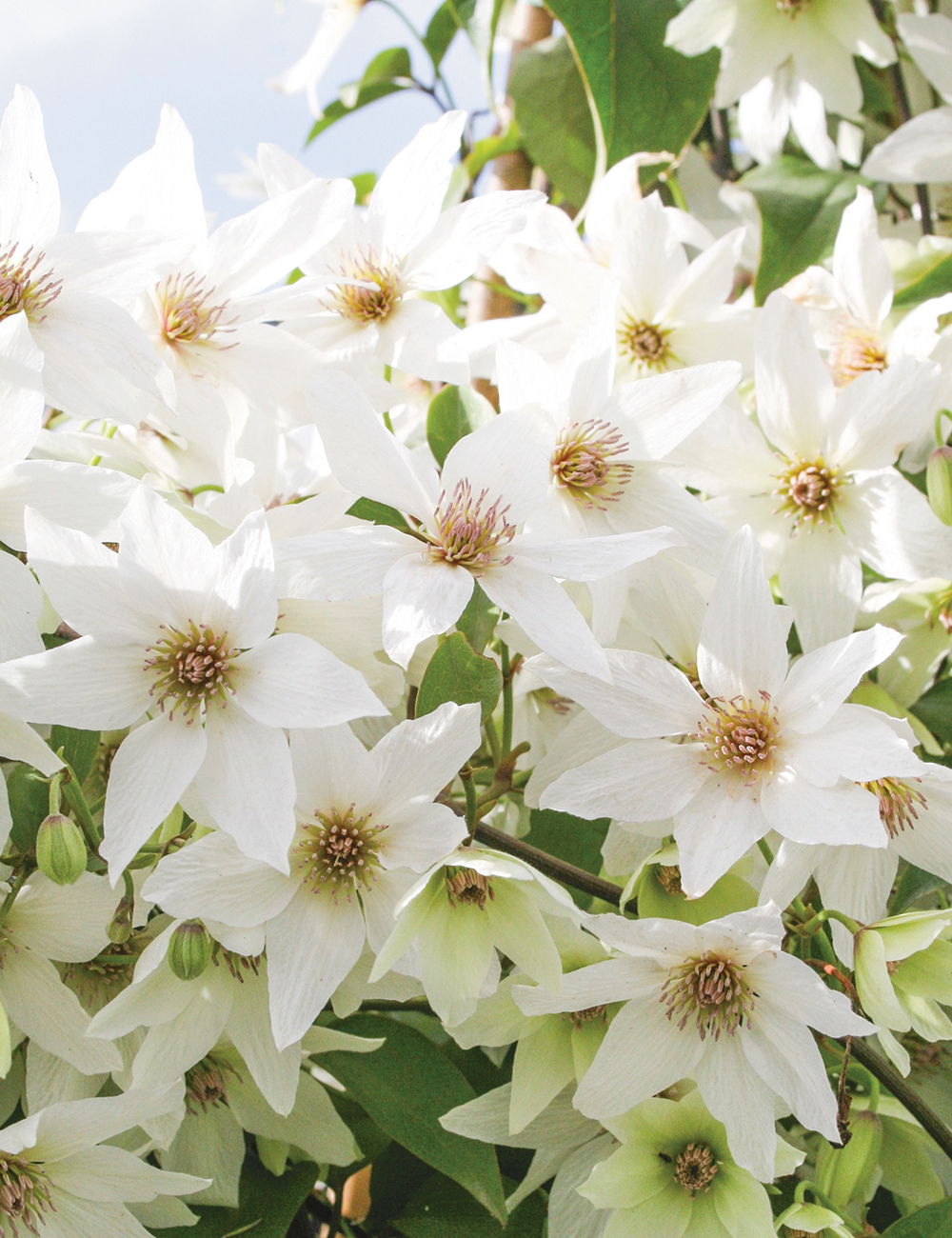
Clematis 'Purity'
Clematis 'Purity'