- Botanical Name
- ‘Sunshine’: Cornus sericea. ‘Westonbirt’: C. alba. Yellow Stem: C. sericea ‘Flaviramea’.
- Family
- Cornaceae
- Plant type
- Deciduous shrub Size (HxW): ‘Sunshine’: 180-300cm x 180-300cm. ‘Westonbirt’: 150-250cm x 150-250cm. ‘Flaviramea’: 150-180cm x 150-180cm.
- Depth & Spacing
- Dig the hole wider than the pot and a little deeper , loosen the walls of the hole, so roots can better penetrate. Place shrub in the hole with roots spread evenly below the soil, re-fill hole and water well. Space 150-300cm apart, closer for more immediate impact, they will gradually clump through undergrounds suckers.
- Soil
- Moderately fertile to humus rich, moist soil is ideal. They can grow in boggy soils or by water.
- Aspect
- Full sun to semi shade. A morning sun position is ideal. Six hours sun will give you the best colour.
- Climate
- Cool to Mediterranean
- Frost
- Fully hardy
- Water
- Water well to establish, it takes 4-6 weeks of regular watering for the roots to penetrate the surrounding soil. Dry tolerant once established.
- Fertiliser
- Well balanced fertiliser spring or autumn while establishing.
- Flowering Time
- Spring to summer, followed by ornamental berries (inedible to us but the birds love them).
- After Flower Care
- You will get the best colour from new growth, but go easy in the first year, give them some time to settle in. Once established, there are two methods to achieve this: 1. You can prune out a third to a quarter of the stems, 2-3 buds from the base, leaving a framework, regularly to encourage more to grow (allowing you the indulgence of filling your vases at the same time) and you still get to enjoy the blooms. 2. Coppice the plant every few years you can prune right back down to 10-20cm off the ground in early spring, after the winter show. It will soon reshoot and the following winter will have a spectacular red thicket. You miss out on the flowers and berries but the winter show will make up for it.
- Notes
- Mulch roots for hot summer months. Simply remove suckers to contain the spread, they are far from aggressive. You can share them or replant. In exposed conditions a summer mulch will be appreciated to help keep the roots moist and cool, or you could interplant with slow growing ground cover, it is native to woodland areas. You could use the framework to grow Clematis or other climbers too.
Dogwood 'Sunshine'
Shop Dogwood 'Sunshine'
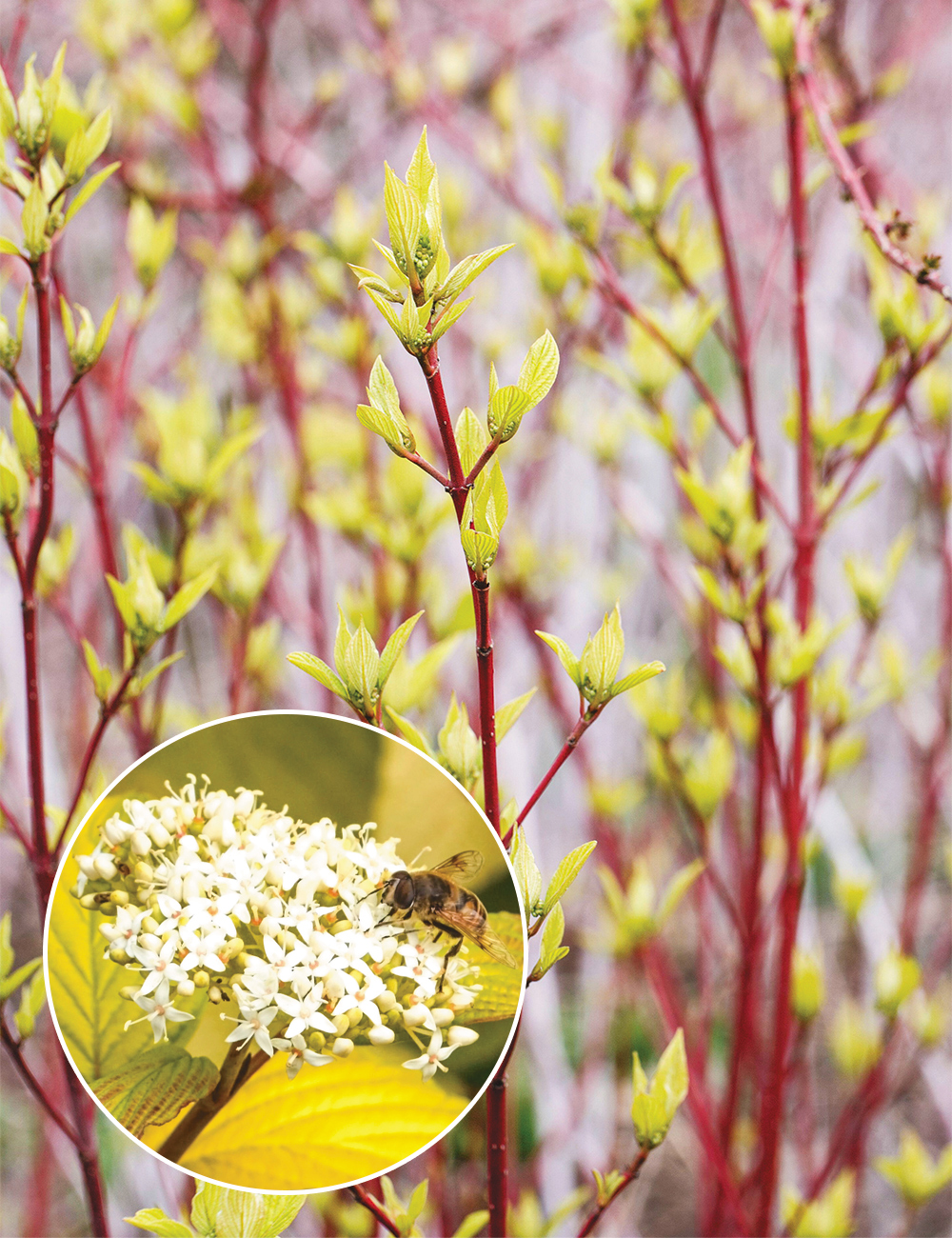
Dogwood 'Sunshine'
Dogwood 'Sunshine'
This product is currently out of season.