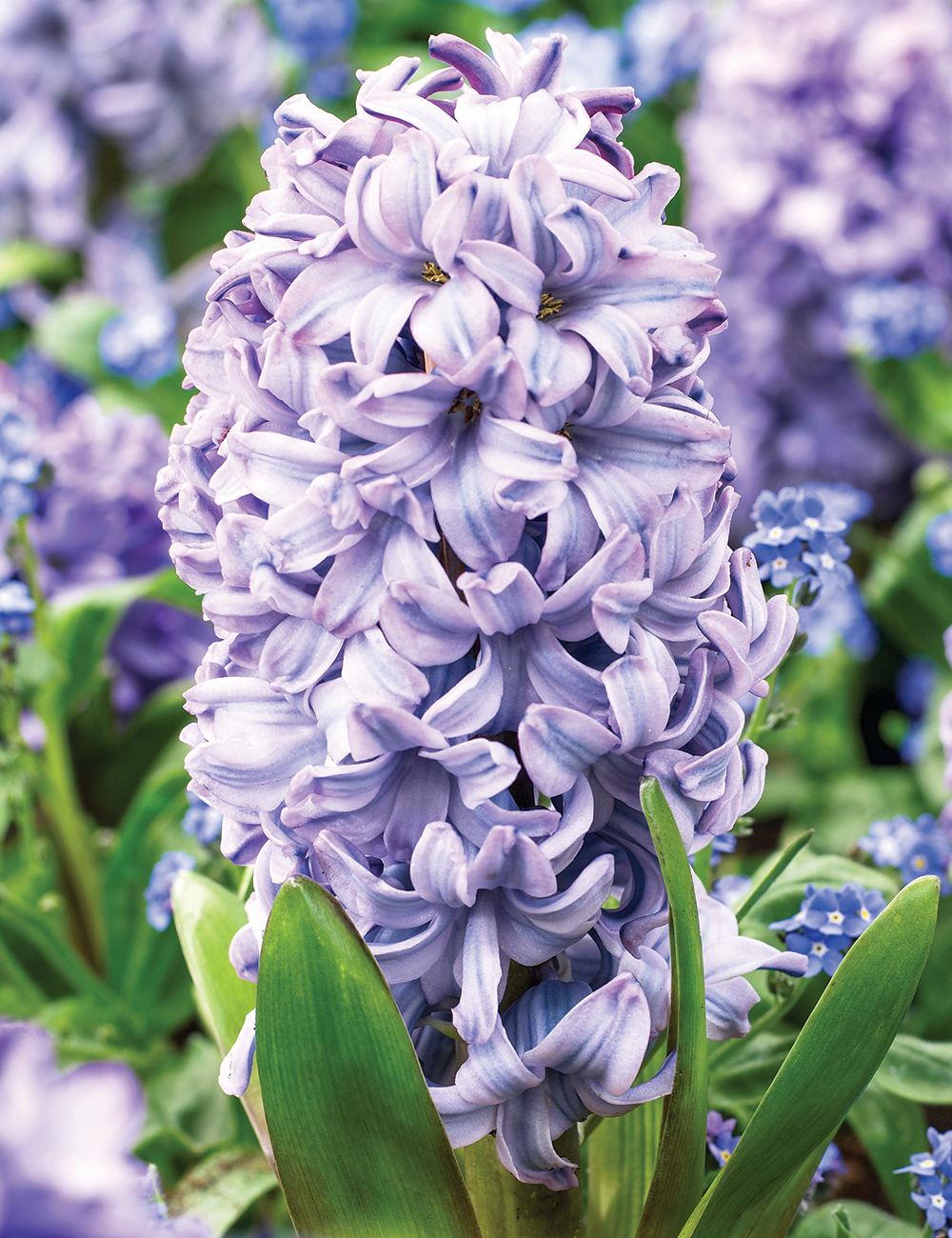
- Botanical Name
- Hyacinthus orientalis
- Family
- Liliaceae
- Plant Type
- Bulb
- Size (HxW)
- 15-20cm x 10-15cm
- Depth & Spacing
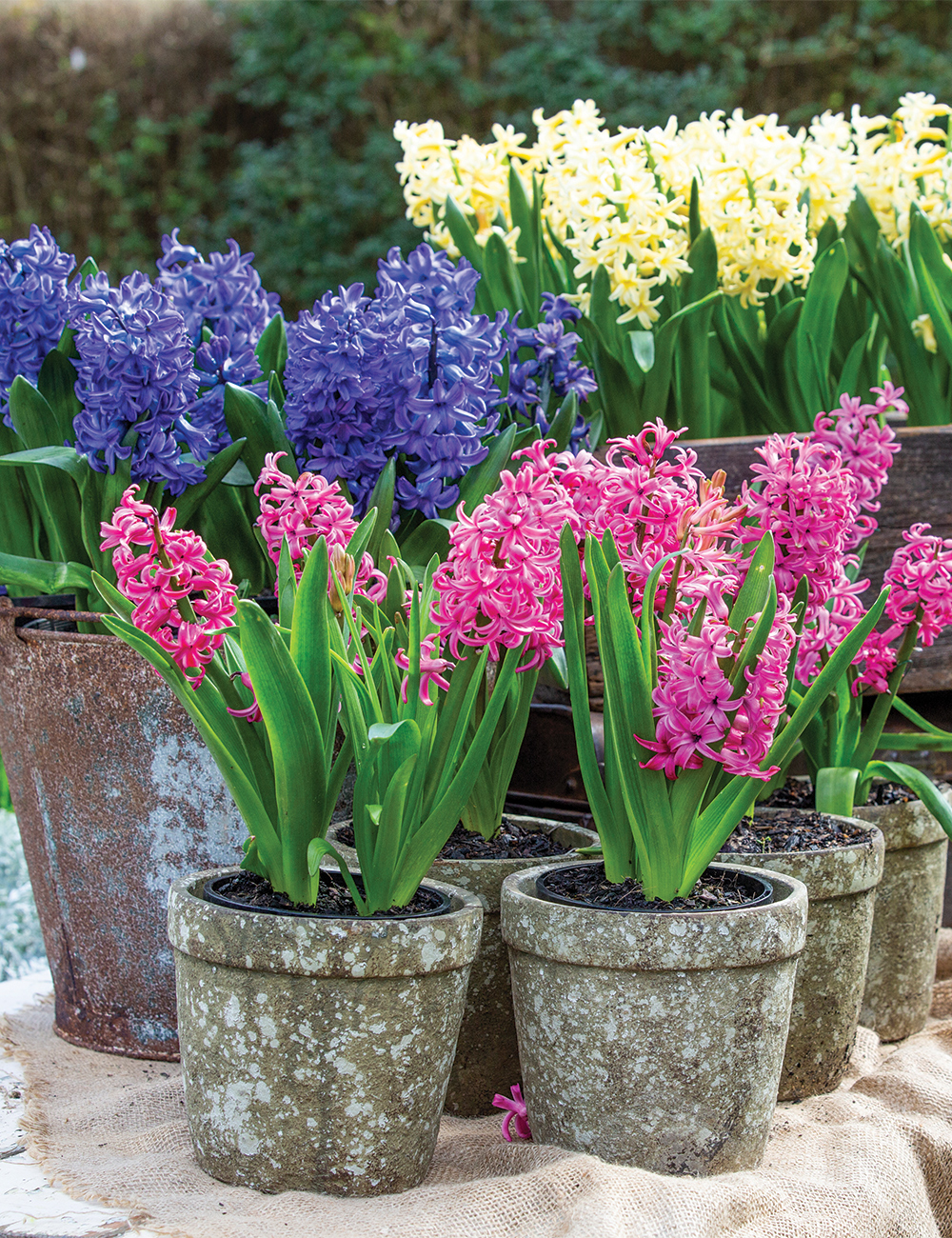
- Plant 10-15cm deep and the same apart. Plant a little deeper in sandy soil to support the stems. Soil: Humus rich, well drained soil is ideal though they are quite adaptable as long as they have good drainage. If the soil is too rich they may become floppy, you can prop them up with a kebab stick - or plant them close so they can lean on each other. In the garden we like to dig a spade head size hole and place three or five together for a generous display.
- Aspect
- Full sun to light shade
- Climate
- Cool to Subtropical
- Frost
- Hardy
- Water
- Water in, then you only need to worry if rainfall is low during active growth. Keep relatively dry during dormancy. In pots it is more important, if they dry out they can become stunted and flower short so, you need to water regularly, they are growing roots July and are still underground – potting mix is perfectly drained so dries out really easily. To help you remember to water you could plant a flowering annual on top.
- Fertiliser
- Dig through a well balanced fertiliser prior to planting (best 1-2 weeks before), then again when flowers have finished. Then a light top dressing in spring will help the bulbs develop flowers for next season.
- Flowering Time
- Late winter to spring
- After Flower Care
- Remove any spent flower stems to tidy and encourage strong bulb growth. Hyacinth bulbs can be left in the garden to naturalise in cool to temperate climates. If you live in a warm climate, it is recommended to lift the bulbs after the foliage has died, then store over the summer period in a cool, dry position to replant in autumn.
- Potting
- Hyacinths are excellent for growing in containers, ensure they have good drainage holes. After potting, place the container in a cool, shaded position until the foliage is 5-10cm tall, then move to a sunny position for the flower to bloom – this ensures tall, strong stems. Watering is also very important; if they dry out they won’t flower well and you need to water weekly after planting, even though you can’t see them, they are growing roots underground. Once they are flowering, pots can be brought indoors for short periods where their fragrance can fill your home. Keep in mind indoor heating will mean the bloom time can be shorter, so you might want to pick a cool room. The bulbs are less likely to multiply or flower in their second year after growing in pots due to water and nutrient limitations/stresses, we recommend either planting them in the garden for the second year or adding them to the compost. You can lift them after flowering so you don’t have to wait for the yellowing leaves and fill the pot with something new and exciting.
- Notes
- When planting Hyacinth bulbs it is a good idea to wear gloves as the bulbs have a natural defence in their skin that flakes off the the bulb. This can irritate sensitive skin and cause itching. Resist the urge to scratch if you are affected, simply wash with warm soapy water.
If you are growing Hyacinths with the ‘Hyacinth Vase’, please refer to the side of the packet for details on the process.
In the garden we suggest planting in clumps, staggered rows or groups – they tend to look lonely when there is just one here and there. Slugs and snails sometimes attack new growth so it is a good idea to protect them. Lift and divide your bulbs every three or four years to prevent overcrowding. Any offsets will take two to four years to bloom. Picked blooms last well in a vase. If the flowers flop it could be due to lack of light, too much heat, not enough water, rapid growth from too many nutrients or they were not planted deeply enough. You can prop them with a kebab stick/metal hoop/wire.
In warm climates Hyacinths should be treated as annuals, they require quite cool temperatures to produce flowers – of course you could always give it a go, lift them after fading and store in the fridge April Fools, replant Mother’s Day (6 weeks-ish). In cold climates, their second year showing isn’t as good as they can be multiplying/have been stressed/too much summer water (they like a hot dry summer)/not enough light.