- Botanical Name
- Erythronium revolutum ('Rose Beauty')
- Family
- Liliaceae
- Plant Type
- Woodland bulb
- Size (HxW)
- 20—30cm x 10cm
- Depth
- Plant bulbs in a permanent shaded position where they can be left undisturbed to naturalise — Erythronium resents being moved once settled.
- Soil
- Cool, moist, well-drained, humus-rich soil. Incorporate leaf mould or well-rotted compost before planting.
- Aspect
- Filtered light/shade — a true woodland plant. Avoid hot, exposed, full-sun positions.
- Climate
- Cool to Temperate
- Frost
- Hard (fully frost hardy)
- Water
- Keep soil moist during active growth and avoid letting it dry out completely, even while dormant over summer.
- Fertiliser
- Top-dress annually with leaf mould, compost or well-rotted organic matter in autumn; a light low-nitrogen bulb fertiliser as growth emerges supports strong flowering.
- Flowering Time
- Spring
- After Flower Care
- Leave foliage to die back naturally after flowering to replenish the bulb — do not cut it back green. Leave clumps undisturbed for several years to allow colonies to form.
- Notes
- Also known as Dog's Tooth Violet, Trout Lily, Fawn Lily or Adder's Tongue. Up to four pendent, recurved rose-pink flowers per stem, each with a golden heart, above purple-mottled foliage. The most common cause of failure is too much sun or letting the soil dry out/bake. Watch for slugs/snails on emerging foliage and bulb rot in poorly drained soil.
Erythronium
Shop Erythronium
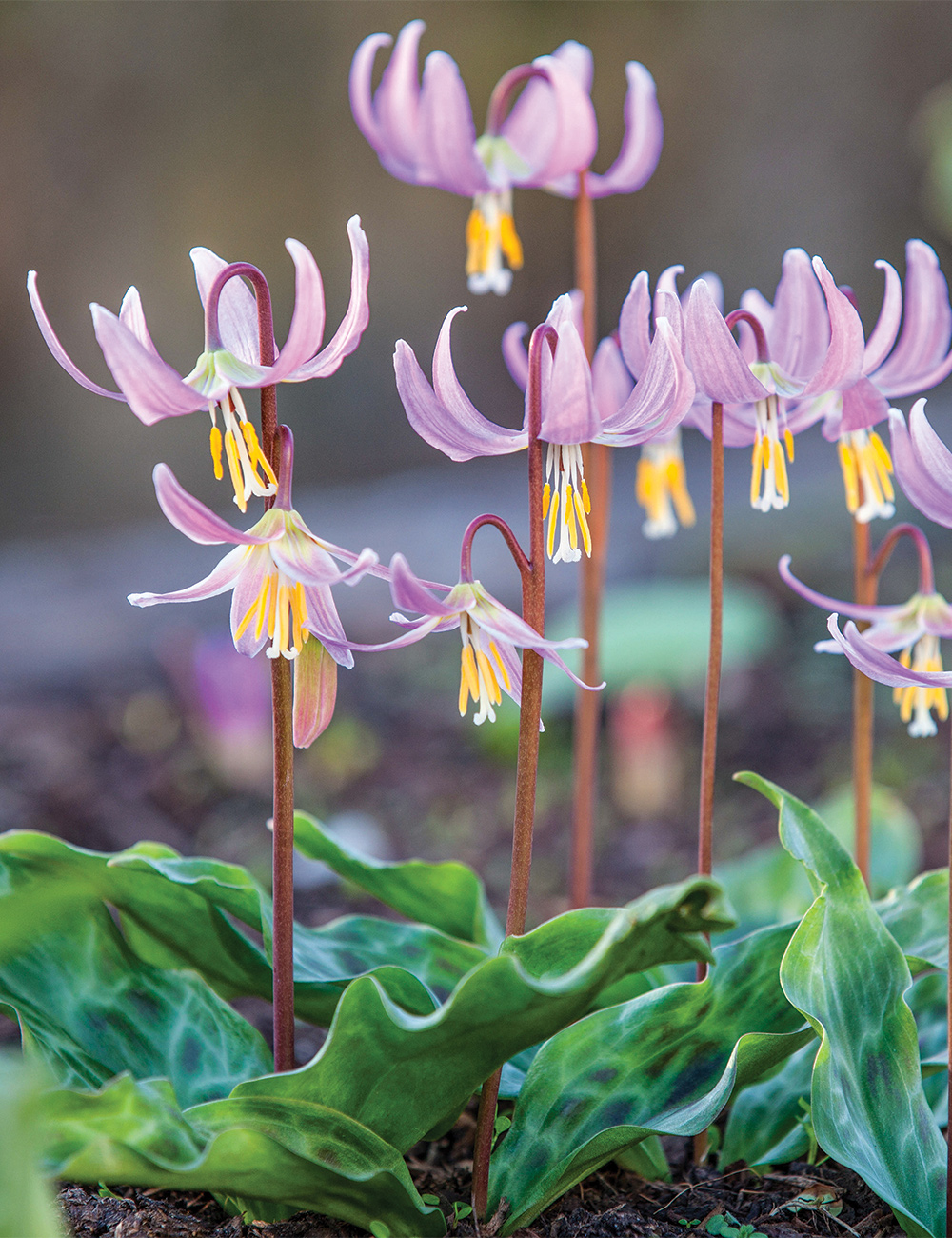
Erythronium 'Rose Beauty'
Erythronium 'Rose Beauty'
This product is currently out of stock.