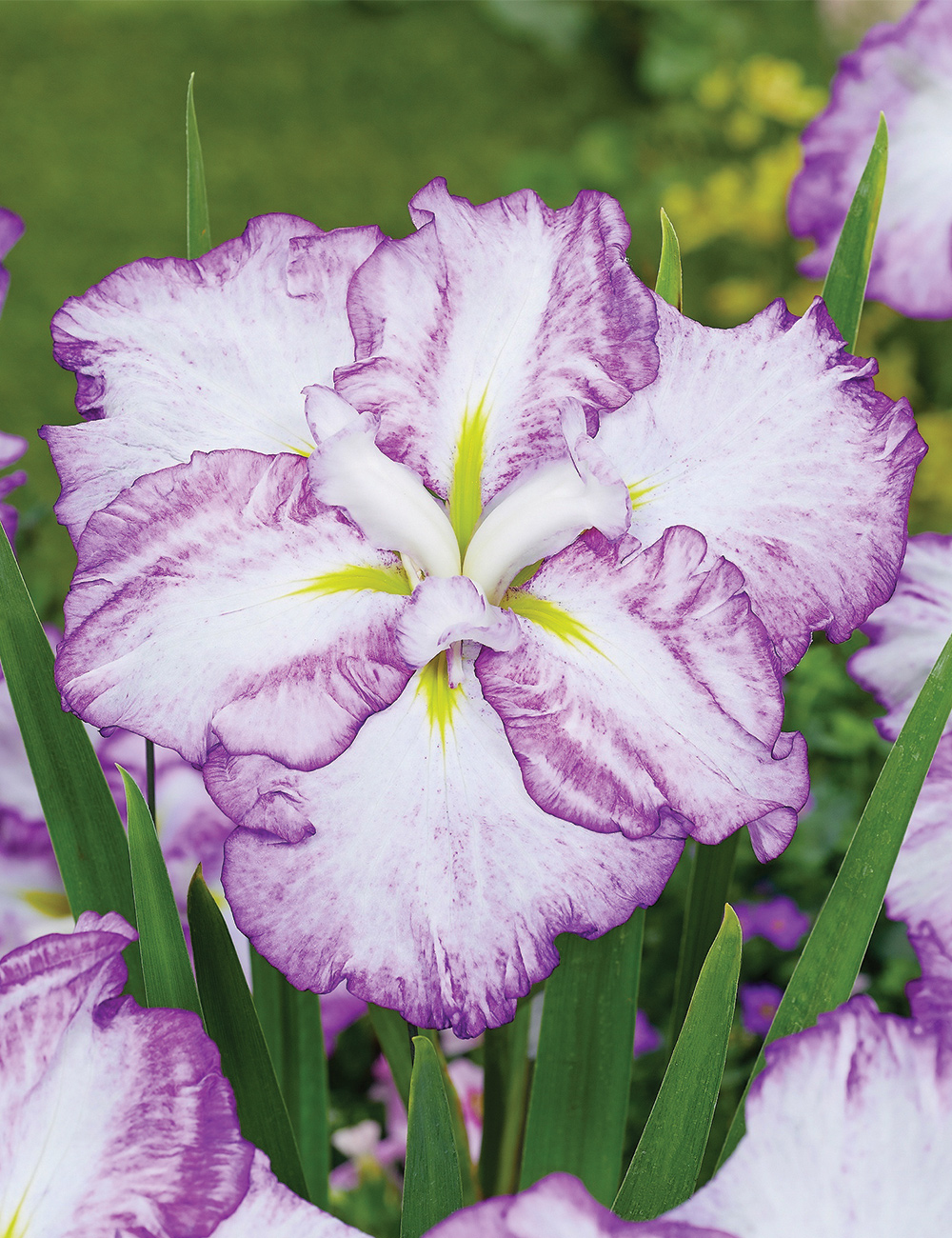
- Botanical Name
- Iris x ensata
- Family
- Iridaceae
- Plant Type
- Rhizome
- Size (HxW)
- 80-150cm x 20-50cm
- Depth & Spacing
- Ideally, soak rhizomes overnight before planting to give them a good start. Plant with crown just below soil surface (1- 2cm) and 20-30cm apart. Plant closer for a denser display sooner. Plant further apart to give room to multiply so that you only have to dig and divide every 2-3 years.
- Soil
- A well drained, humus rich, acidic soil is preferred. They will not tolerate too much lime and require a PH below 6. If the soil is too alkaline the leaves will likely turn yellow. If planting into a pot use a good quality potting mix.
- Aspect
- Full sun. Light shade is tolerated in warmer climates.
- Climate
- Cool to Sub Tropical
- Frost
- Hardy
- Water
- Keep moist in active growth, especially in warmer zones – if they dry out during this growth they will not flower as well as they could. Keep relatively dry during dormancy, or ensure the soil is well drained. They can be grown in boggy spots or ponds if they are planted in large pots.
The pots need to be taken out of the water as the plants go into dormancy and over wintered somewhere out of the way. It is the pattern of moisture during the growing period and relative dryness during the dormancy which provides the ideal growing conditions for Japanese Iris.
- Fertiliser
- Heavy feeders; apply as the rhizome starts to shoot in spring. Rose food, Azalea food, compost or cow manure are ideal.
- Flowering Time
- Summer
- After Flower Care
- Remove spent flowers. Divide after flowering as required.
- Notes
- Add organic matter to the soil when planting. Mulch heavily after planting. If growing in pots in water, it is a good idea to re-pot each year when you remove the pots from the pond. Divide every three years or so to maintain vigour and to increase your numbers.