- Botanical Name
- Living Stones: Lithops hookeri. Split Rock: Pleiospilos nelii.
- Family
- Aizoaceae
- Plant Type
- Evergreen succulent
- Size (HxW)
- Split Rock: 2-8cm x 2-10cm. Lithops: 2-5cm x 2-5cm
- Depth & Spacing
- Plant at the same level as in the pots with roots below the soil. Space around 5cm apart. You can leave them in the current pot and add a decorative surrounding pot. Be gentle when moving.
- Soil
- Use a cactus or succulent mix – or a shale mix to give them the sharp drainage they need. You could also use a mixture of shale and perlite or an inorganic small stone mix. Do not use ordinary potting mix as it has too much organic matter and will retain too much moisture so may cause them to rot.
- Aspect
- Bright, indirect light is ideal. Keep out of the hot afternoon sun (especially in summer) lest their leaves be sunburned or roots damaged. To be overly specific, they need 3-5 hours of direct bright light and more of indirect if possible.
- Climate
- Cool to Sub Tropical. In areas of high humidity it is a good idea to create additional air flow, for instance with a fan -they are sensitive to too much moisture.
- Frost
- Tender
- Water
- It is always better to under do it, observing when the water storing leaves begin to shrivel and only then watering. Not watering is more important than watering! Very little water is required as the leaves store the water required for growth. If the leaves crack, or become soft water less often. The plant body should be firm and light.
- Recommended
- spring – monthly, summer/autumn – every 2 to 4 weeks, winter – none- you may not need to water at all for six months, this is absolutely normal, and will leave you twiddling your thumbs! The reason for this is the new plants are forming and will subsist on the stored water and nutrients of the ‘old’ foliage at this time the roots are not used, so if you water then they can rot or you can confuse the plant half way through its growth - they are easy to kill with kindness!
- Fertiliser
- Feed with a diluted low-nitrogen liquid fertiliser at quarter strength in summer. If you have some Dolomite lime lying around or rock dust add it to the mix for some trace elements. Use a diluted, liquid fertiliser to just a quarter strength in spring to keep them happy and healthy.
- Flowering Time
- Summer to autumn. They need strong light to do this.
- After Flower Care
- Not required … after flowering, the plant splits and dries out, the old foliage wrinkles and a new plant emerges from within. These plants undergo this fantastic transformation over winter, in a constant process of renewal with an all new skin (ahh if only we could do this). Depending on where you live, they plant is likely to go dormant for a while at this time, then ‘coming back to life’ summer/autumn with a new bloom.
- Notes
- Choose a pot with drainage holes to ensure they don’t end up sitting in water, or promise to be restrained in watering. Best grown in a deep container (10cm) to allow their roots a space to grow. Adding a sprinkling of small stones to the top of the mix creates a nice, natural look. Repot every two to three years in spring, once the new plant is formed. When repotting, don’t water, let them form some roots – check after a week or two with a gently tug, and only then should you water again. The stemless leaves are split down the middle and united at the base.
Split Rock
Shop Split Rock
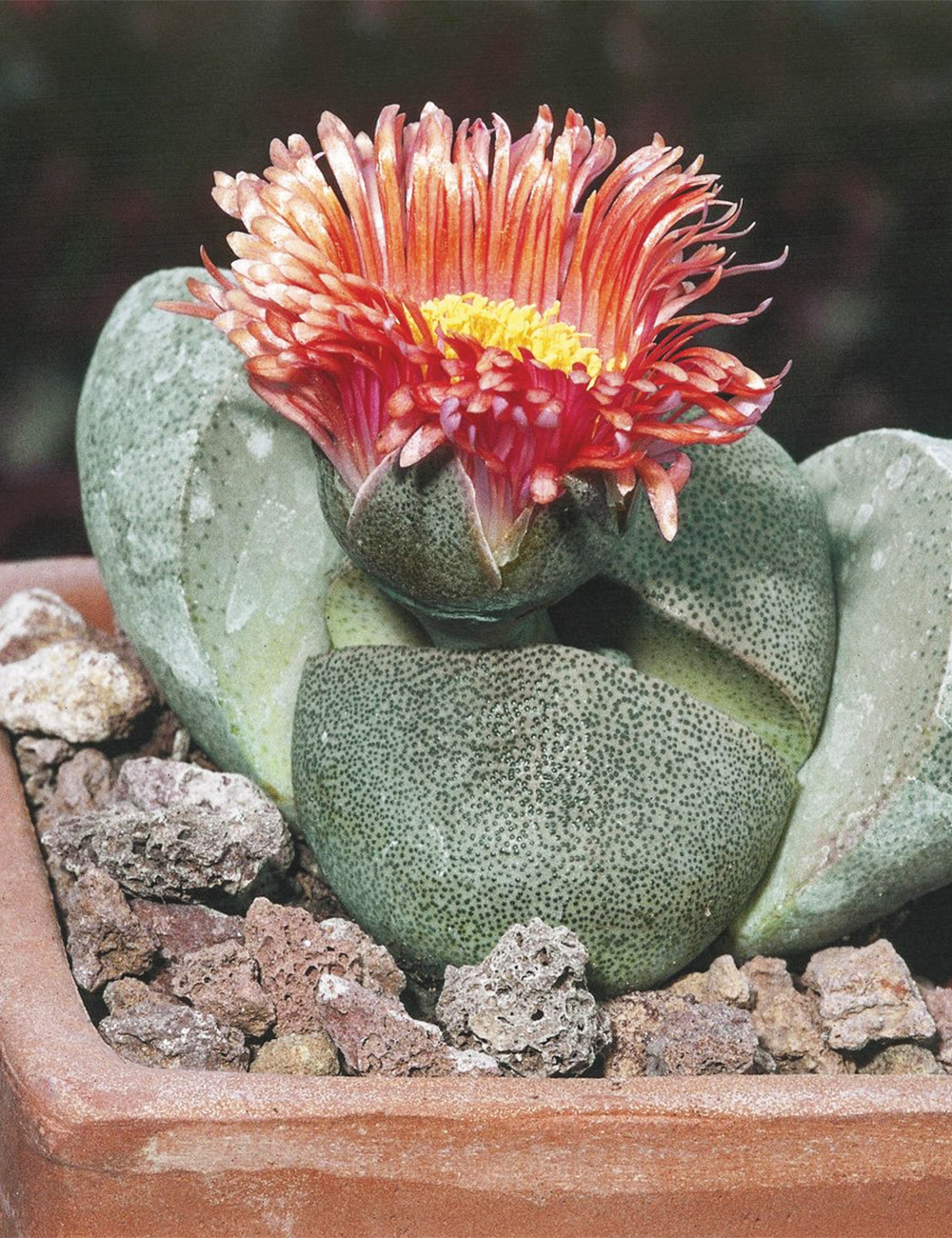
Split Rock
Split Rock
This product is currently out of season.