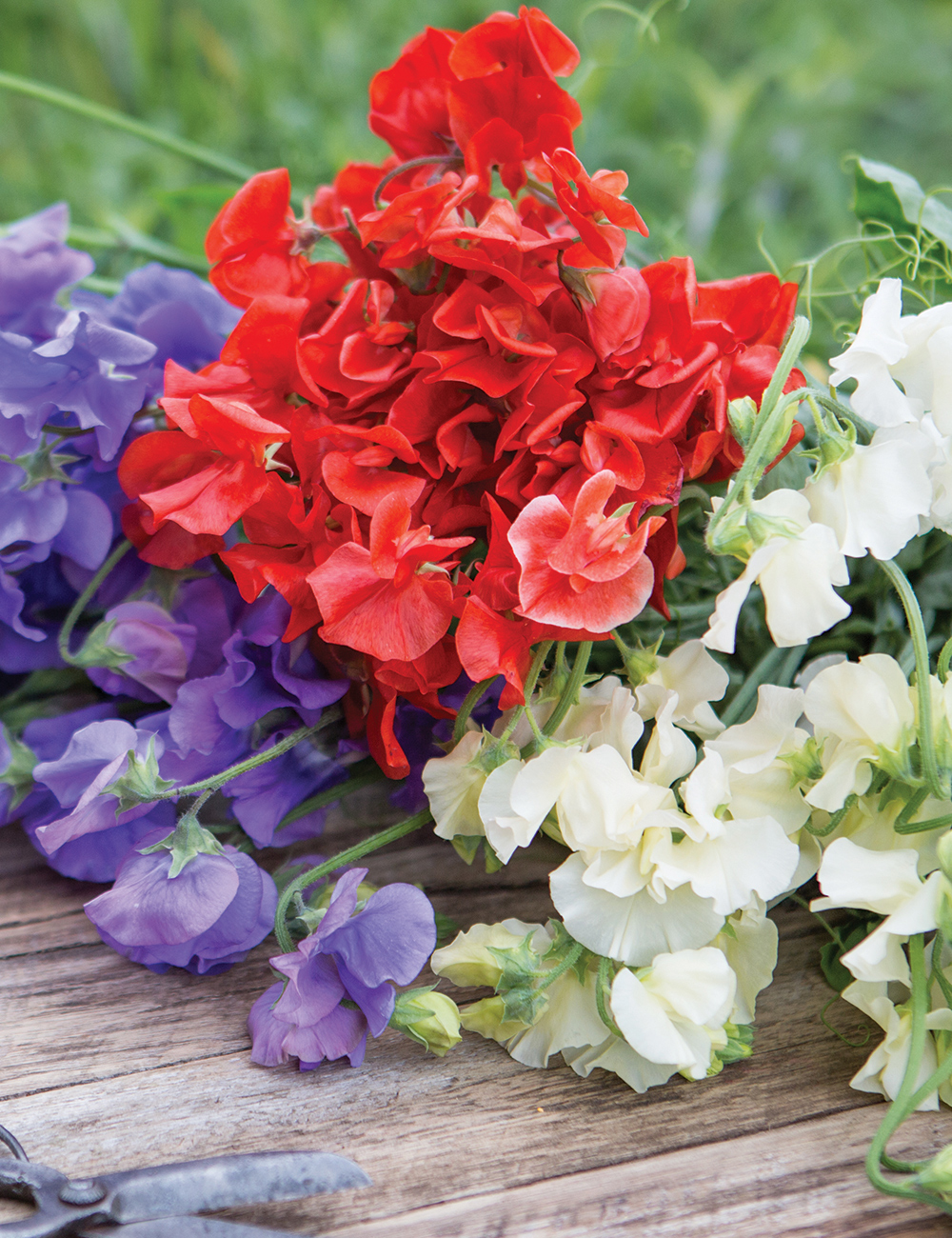
- Botanical Name
- Lathyrus odoratus
- Family
- Leguminosae
- Plant Type
- Annual climber
- Size (HxW)
- 1-2.5m x 15-20cm – This is really subject to where you grow your Sweet Peas as you could grow them taller/wider depending on your structure.
- Depth & Spacing
- Ideally plant around Anzac Day. It is best to have your support structure established in the ground before planting. Plant 1-2cm deep and space 15cm apart - it is best to plant in twos for a fuller display and as with all seeds not 100% grow - we add extras to account for this. Germination takes 1-2weeks. If you are planting in a cold climate with hard frosts it is a good idea to plant them after; you could first plant them in long thin pots or use empty kitchen paper towel rolls (the container should be long and thin because, as a legume, they have a long tap root and the more established it is, the stronger the plant will be). Once the threat of frost as passed, plant them out (be very gentle with the roots). Once the seedlings have reached 10-15cm tall, and have two sets of leaves, you can pinch out the top leaves to encourage more side shoots – more side shoots means more flowers. Guide the early shoots onto the support frame with ties, after this the tendrils tend to take over. For maximum flowers, always tie your shoots upwards, this prevents bends in the stem which makes it harder for the nutrients to reach the growth tips.
- Soil
- Good soil makes all the difference. Humus rich, moist, well drained soil is ideal. Adding some well rotted manure/compost, superphosphate and handful of garden lime and digging it through the soil prior to planting will increase nutrients and aid water retention. Ideal PH of around 7.
- Aspect
- Full sun to light shade. They need at least six hours for best blooms.
- Climate
- Cool to Sub Tropical
- Frost
- Hardy
- Water
- Keep moist while growing to get the best of your flowers. Don’t let them dry out, otherwise they can stress and likely go to seed early.
- Fertiliser
- Add a slow release fertiliser as they begin to grow or add a liquid fertiliser every fortnight during growth. A tomato fertiliser is a good choice. Don’t forget if you choose a slow release fertiliser it will only ‘release’ when it is warm and wet so you need to water.
- Flowering Time
- Spring to summer
- After Flower Care
- Early on, remove early blooms to encourage root development which will result in a stronger plant giving you more flowers for longer. The more you pick the more you will have so dead head/pick your blooms regularly to encourage more.
Ensure you cut off any seed pods that form as they will reduce flowering – their goal in life is to produce seed- so if they have done this they will begin to die back. In cutting off flowers and seed pods you are ‘tricking’ the plant to go on producing more blooms – of course it will need fertiliser and water to keep this up.
- Notes
- Grow on pyramids, trellis, fences etc.for support. Suitable for pots and hanging baskets. Protect seedlings from mice, slugs and snails. When in growth keep an eye out for aphids. Ensure good air flow to avoid powdery mildew – though these cultivars have good resistance.