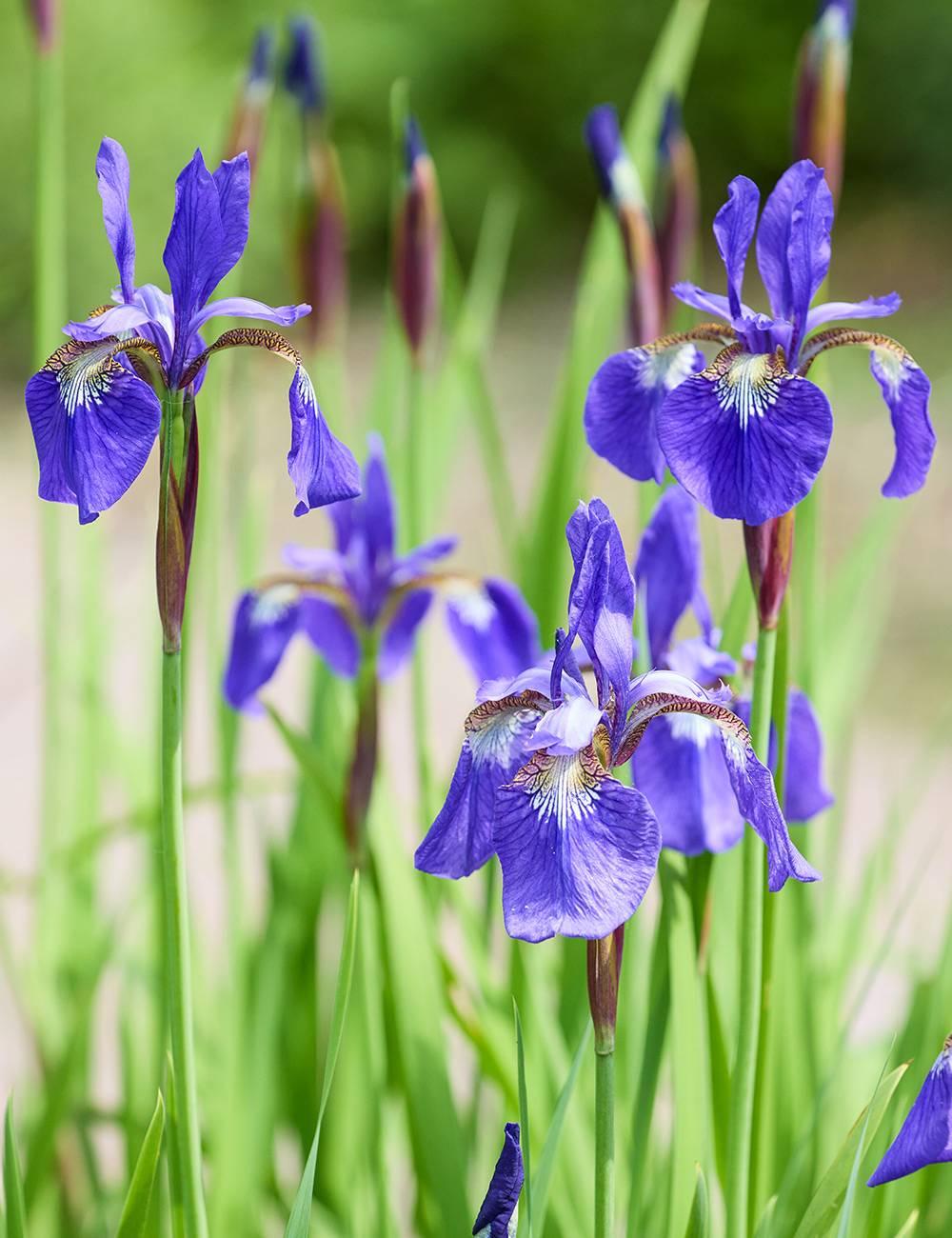
* Plant as soon as possible, as they do not like to overly dry out.
- Botanical Name
- Siberian: Iris sibirica. Bulleyana: I. bulleyana. ‘Gerald Darby’: I. x robusta.
- Family
- Iridaceae
- Plant Type
- Herbaceous rhizome
- Size (HxW)
- Siberian: 50-100cm x 20-40cm. Bulleyana: 35-50cm x 20cm. ‘Gerald Darby’: 60-120cm x 30-90cm.
- Depth & Spacing
- Plant at the same level as in the pot, with the roots evenly spread below (rhizomes around 5cm below soil level). Space 20-40cm apart, closer for a more immediate effect, they will gradually multiply to form clumps.
- Soil
- Humus rich, moist soil. Will tolerate just about any soil type, and even cope in boggy conditions.
- Aspect
- Full sun
- Climate
- Cool to Mediterranean
- Frost
- Hardy. They love frosts and will often flower best after a cold winter, though frost is not necessary for them to flower, they just won’t be as tall and floriferous. You could try the old frozen ice cream bucket of water overnight trick on them during July if you want to try growing them where you don’t get frost. Do this for
- Water
- Water in to establish, (regular watering for the first four to six weeks, flowering can be aborted if they dry out), then only if rainfall is low during active growth. They will flower better with consistent moisture but will tough out dry conditions once established.
- Fertiliser
- Apply a well balanced, or a Camellia/Azalea fertilser each autumn and spring for best flowering.
- Flowering Time
- Late spring to summer (usually just after Dutch Iris).
- After Flower Care
- Cut back untidy foliage as necessary to tidy. They can be left undisturbed for many years, however, if you wish to increase stock lift then divide in summer every three or four years. We recommend wearing gloves when dividing/handling rhizomes. Disturbance may reduce flowering that season. Remove spent flowers/seed pods to encourage bulb growth.
- Notes
- The foliage will die back completely in late summer and re-shoot mid spring. Be patient waiting for new growth, as they will be totally dormant from autumn until mid spring.